Start with the clothes you already wear
Secondhand shopping is easier when you know what fits you now. Before you browse, pick a few garments you reach for often and note what makes them comfortable: the room across the shoulders, the rise of the trousers, the sleeve length, or where a hem falls. Measure those garments laid flat if you plan to shop online. A familiar piece gives you a more useful comparison than a size label alone.
Decide what you actually need, too. A striking jacket is less useful if it duplicates one you rarely wear or needs an entire new outfit to make it work. Keep a short list of gaps in your wardrobe, along with colors and shapes you like wearing. Leave room for a pleasant surprise, but ask whether you can picture using the item regularly.
Check fit while you move
Sizes vary between brands, styles, and eras, so treat the label as a starting point. If you can try an item on, sit, bend, reach, and walk in it. Check that seams stay where they belong and that closures do not pull. A shirt may look right while you stand still but feel tight when you lift your arms; trousers may fit at the waist but be uncomfortable when you sit.
Pay particular attention to areas that are difficult to alter, such as shoulders, armholes, and the seat of trousers. A hem that is too long may be manageable; a jacket that restricts your movement may never become a favorite. If you cannot try the garment on, compare the seller’s measurements with those of a similar item you own. Ask how measurements were taken when the listing is unclear, and allow for the ease you prefer rather than aiming for an exact match.
Read the fabric and care label
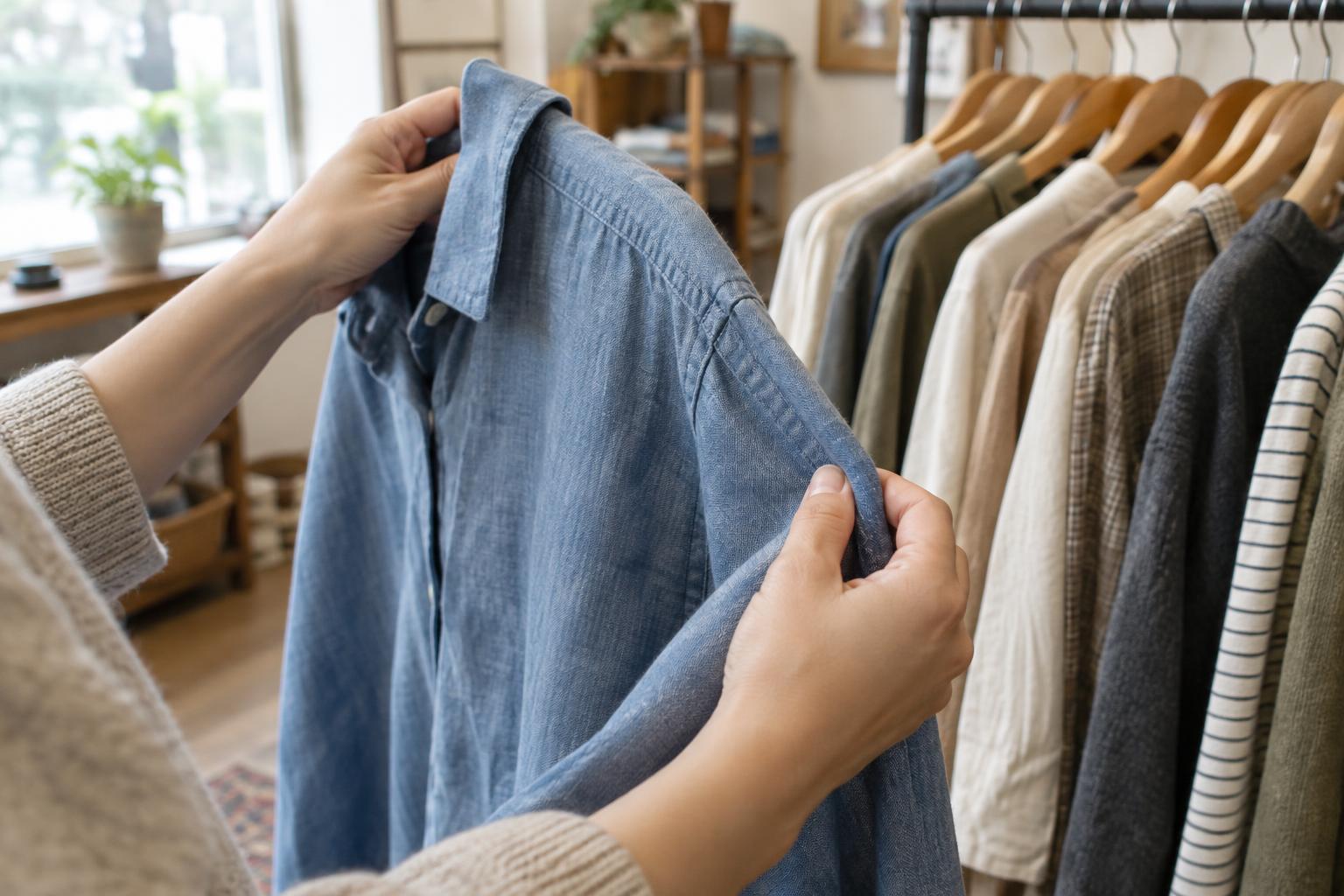
The fiber label can help you anticipate how a garment will feel and how you will care for it, but fiber content is not a quality guarantee. Handle the fabric when possible. Does it feel pleasant against your skin? Does it drape the way you want, or seem too stiff or sheer for its intended use? Hold it up to the light to look for thinning, especially at elbows, knees, and other high-contact areas.
Check the care label before committing. If an item needs a care routine you are unlikely to follow, a low price may not make it a useful purchase. For online listings, look for a clear photograph of the label and close-up images that show the fabric’s texture. If those details are missing, ask. Remember that some pilling can be removed, but extensive fuzziness or stretched-out fabric may be harder to improve.
Look for wear where it tends to hide
Inspect secondhand clothes in good light and look beyond the front. Check collars and cuffs for discoloration or fraying; underarms for marks, odor, or weakened fabric; and pockets, hems, inner thighs, and seats for holes or abrasion. Turn the garment inside out if you can. Look for loose seams, damaged linings, and previous repairs, which may be perfectly serviceable if they are secure.
Test buttons, zippers, snaps, and elastic. Check whether a pattern lines up at visible seams if that matters to you, and look for twisting that suggests the garment no longer hangs straight. A missing button or small loose seam may be a simple fix; a broken zipper or broad area of worn fabric is a bigger commitment. For online purchases, examine every photograph and request images of any area you cannot assess. A description such as “good condition” is less helpful than specific details.
Make the decision based on use, not the bargain
Before buying, add the likely work to the price in your mind. Will you need to wash it carefully, remove pilling, mend a seam, or arrange an alteration? Do you have the time and willingness to do that? It is reasonable to buy an imperfect item with a clear, manageable fix. It is also reasonable to leave it behind when the fix is uncertain.
Give yourself a final check: Does it fit comfortably, suit your everyday life, and work with clothes you own? Would you still want it if it were not a recognizable brand or an unusually low price? Buying secondhand can extend the use of a garment, but only if you will wear it. The best find is not necessarily the rarest one; it is the piece that earns a place in your wardrobe.